
AI SEO ROI measures the financial returns from optimising content for AI search platforms including ChatGPT, Google AI Overviews, Perplexity, and Claude. Unlike traditional SEO where success means ranking on page one, AI search optimisation success means your brand gets cited when large language models generate answers to user queries.
This guide covers measurement frameworks specifically designed for small-to-medium UK businesses investing in generative engine optimization. We focus on practical, implementable tracking systems rather than enterprise-level attribution models requiring dedicated data science teams. If you’re a business owner, marketing manager, or SEO professional who needs to justify AI search investments to stakeholders, this content addresses your specific challenges.
TLDR: AI SEO ROI tracks revenue generated from brand mentions and citations in AI generated responses, calculated as (AI-attributed revenue − AI SEO costs) ÷ AI SEO costs × 100. Research shows businesses achieving strong AI visibility can see ROI exceeding 6,800% over 17 months, though typical returns range from 200-500% for well-executed campaigns.
By the end of this guide, you will understand: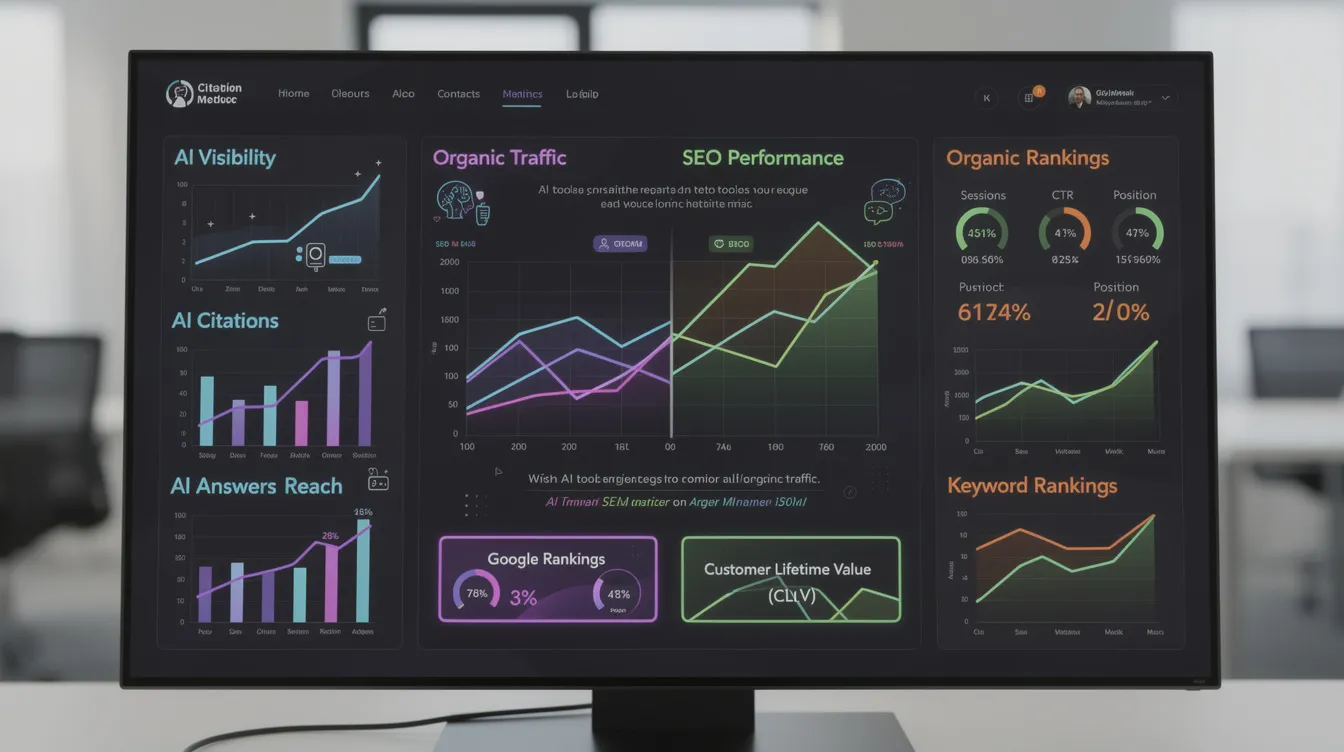
AI search optimisation requires fundamentally different measurement approaches than traditional search engine optimization. The business impact stems from brand visibility within AI answers rather than website traffic volume, which changes everything about how you prove value.
Traditional SEO drives clicks to your website where you control the conversion journey. AI search engines deliver complete answers within the platform itself, meaning users often get what they need without ever visiting external websites.
This zero-click phenomenon dominates AI search behaviour. When someone asks ChatGPT “best accounting software for UK small businesses,” they receive a comprehensive answer incorporating multiple sources. Your value comes from being cited as an authoritative source within that AI response, not from receiving a click.
Brand authority and citations create the competitive advantage in AI search. Users treat AI answers as trust signals, and being mentioned alongside industry leaders positions your brand for future consideration even without immediate traffic. Data shows AI-derived traffic converts at approximately 6.24% compared to 3.29% for traditional organic search—these visitors arrive pre-educated and further along in their buying journey.
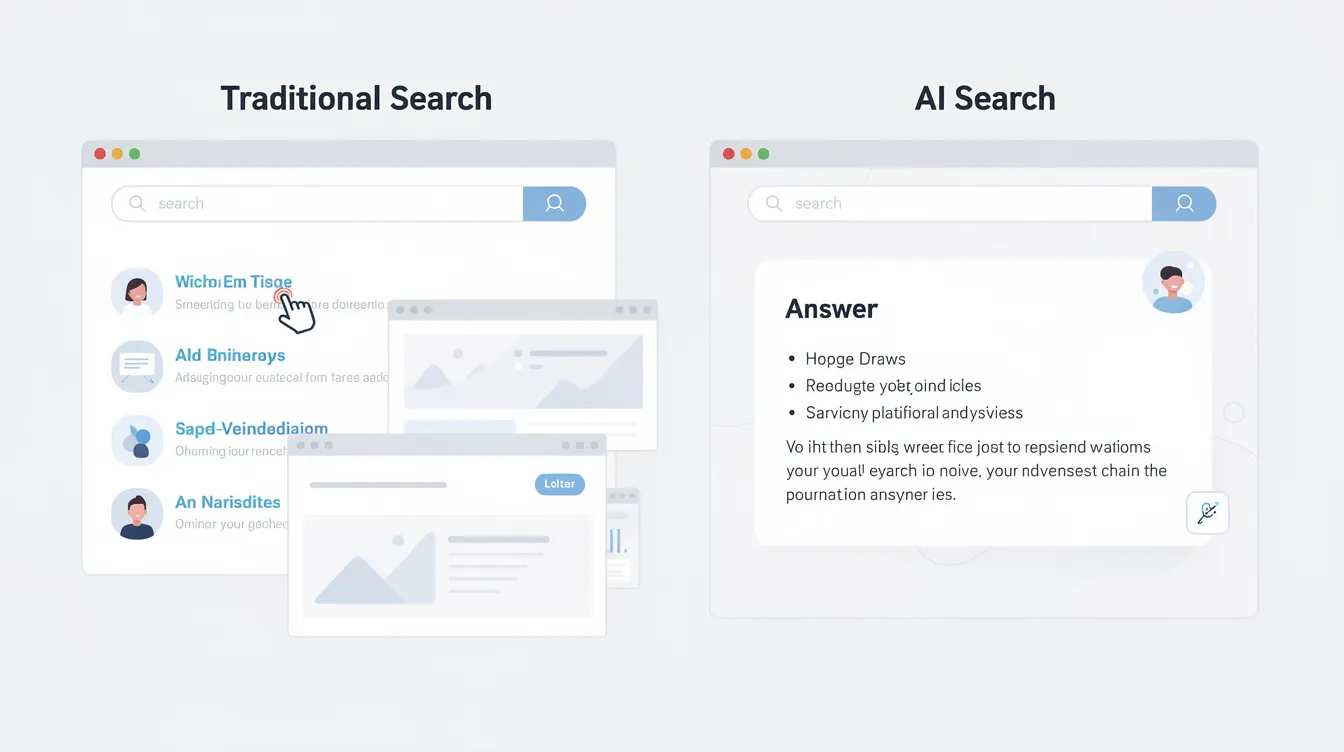
Click-through rates become meaningless when most AI answers don’t generate clicks. Bounce rates and session duration measure website engagement, but if users never reach your website, these metrics show nothing about your AI visibility performance.
Revenue attribution grows complex because AI systems blend multiple sources into single responses. Unlike Google rankings where position correlates with traffic, AI platforms may cite your content prominently while delivering zero referral traffic. Your brand mentions appear in AI results, but Google Analytics shows no corresponding sessions.
Traditional seo roi calculations assume direct paths from keyword rankings to conversions. AI search breaks this assumption—someone discovers your brand through a ChatGPT citation, later searches your brand name on Google, then converts through a paid ad. Your AI SEO efforts influenced the conversion, but standard attribution misses this entirely.
Understanding these differences leads directly to new measurement approaches that capture AI search value accurately.
Measuring AI SEO success requires tracking metrics that traditional seo roi frameworks don’t capture. These KPIs connect directly to revenue impact and sustainable growth in AI visibility.
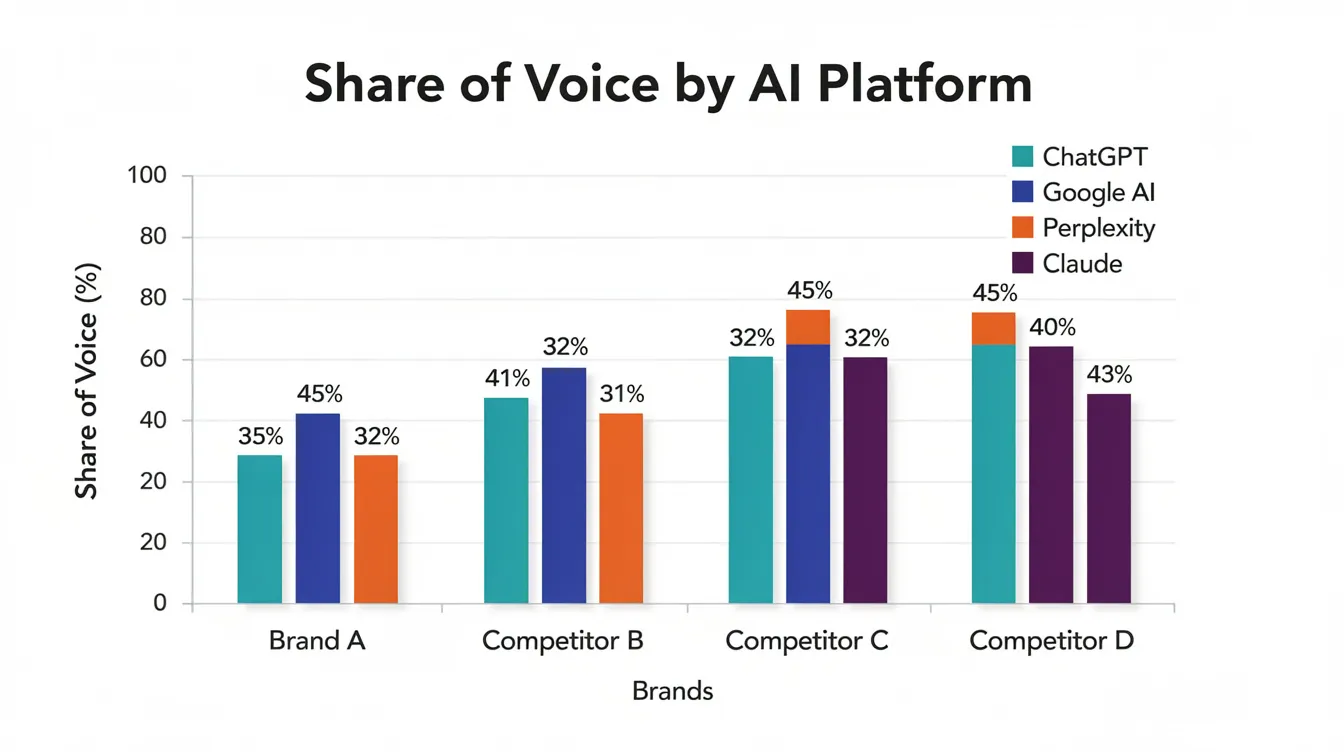
Share of voice measures what percentage of AI answers mention your brand versus competitors across relevant queries. This metric serves as your primary benchmark for AI visibility and market positioning within generative engine optimization.
Calculate share of voice by running a defined set of prompts (50-100 queries relevant to your business) across ChatGPT, Google AI, Perplexity, and Claude. Track how often your brand appears compared to competitors. Benchmarks from industry data suggest: above 20% indicates excellent performance, 10-20% represents good positioning, and below 5% signals critical improvement needs.
This metric matters because it measures market share in AI search beyond traditional rankings. A competitor might outrank you on Google but rarely appear in AI engines, giving you competitive advantage in the growing AI search channel.
Citation frequency tracks how often AI models reference your content as a source. Monthly citation volume across AI platforms reveals whether your generative engine optimization efforts are gaining traction.
Not all citations carry equal weight. Analyse citation context to distinguish between basic mentions and high-value topic authority positions. A citation where the AI response states “According to [your brand], the most effective approach is…” carries more weight than a passing mention in a source list.
Response ranking position within AI answers also matters. Citations appearing in the first paragraph of an AI response receive more user attention than sources listed at the bottom. Track citation position alongside frequency for complete picture of AI visibility quality.
Content appears more frequently in AI answers when it includes specific structural elements. Research shows 91% of AI-cited content uses bullet points, 75% displays author credentials, 57% includes publication dates, and 35% features FAQ sections. This data directly informs your content strategy.
Branded search volume increases following AI citations indicate AI-influenced brand awareness. Monitor your Google Search Console data for branded keyword growth that correlates with periods of high AI visibility.
Direct traffic growth from users typing your domain also signals AI search impact. Someone who encounters your brand in a ChatGPT response may later navigate directly to your website without any trackable referral source.
Track customer lifetime value and acquisition costs for AI-discovered users versus traditional channels. Early movers report that AI-influenced customers arrive better educated, show higher engagement, and demonstrate stronger customer lifetime value. Comparing these cohorts reveals true revenue impact.
These metrics feed into comprehensive ROI formulas that prove AI search investment returns.
Converting AI visibility metrics into ROI calculations requires specific tracking infrastructure. This framework provides actionable steps for UK small-medium businesses to measure and prove AI search investment returns.
Implement these tracking methods systematically to capture AI search business impact:
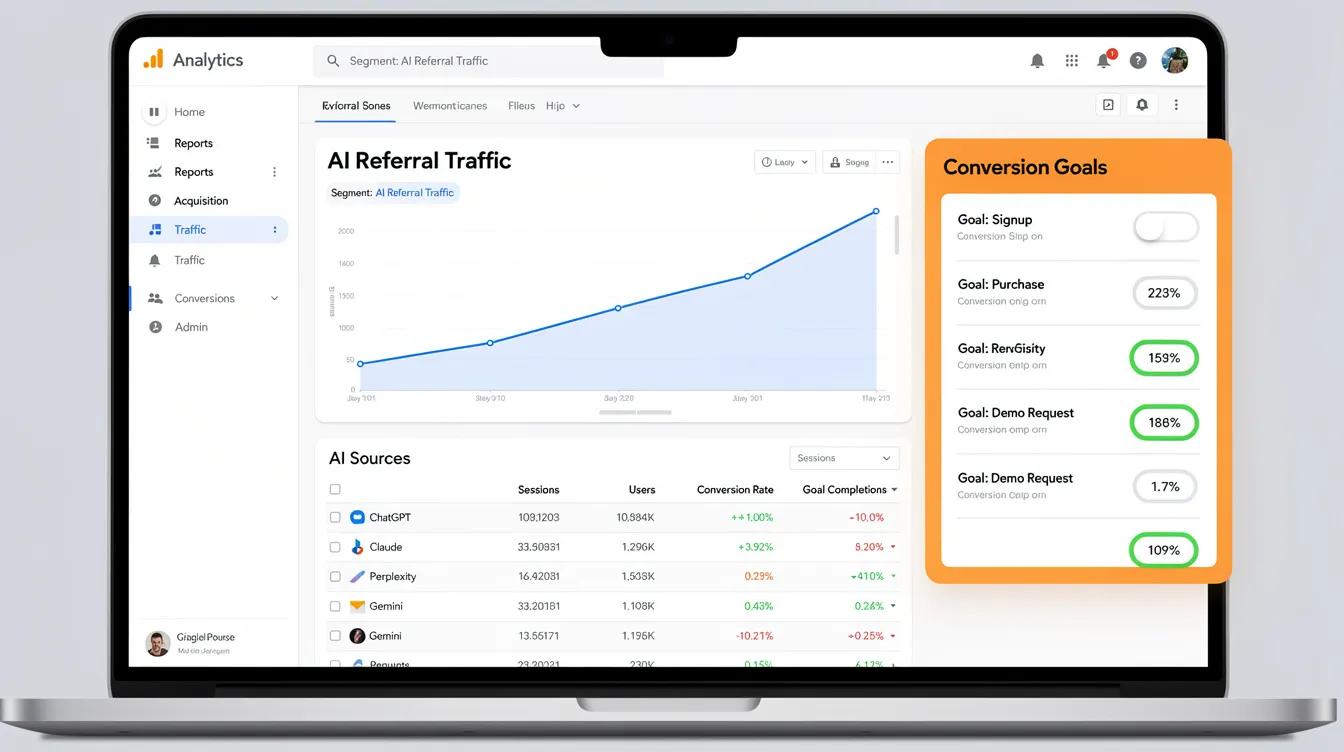
Different business contexts require different measurement approaches. Select your attribution model based on available resources and sales cycle complexity.
| Attribution Method | Best For | Accuracy Level | Implementation Complexity |
|---|---|---|---|
| Direct AI Referral | Immediate conversions, e-commerce | High (when available) | Low |
| Multi-touch Attribution | Full customer journey, B2B sales | Very High | High |
| Brand Lift Analysis | Awareness impact, long sales cycles | Medium | Medium |
| Branded Search Correlation | SMBs with limited tracking resources | Medium | Low |
Direct AI referral works when AI platforms provide clickable sources. Perplexity shows visible URLs in approximately 96.5% of responses, making direct tracking viable. ChatGPT links in roughly 50% of responses.
Multi touch attribution assigns partial credit to AI mentions within longer customer journeys. A typical path might follow: AI citation → branded search → website visit → conversion. This model requires CRM integration and customer journey mapping.
Brand lift analysis uses surveys asking “Where did you first hear about us?” with AI platform options. This captures awareness impact that analytics can’t track.
Branded search correlation monitors whether branded search volume increases follow periods of higher AI visibility. Simple to implement and provides directional accuracy.
Choose the model that balances accuracy with your implementation resources. Most businesses benefit from combining branded search correlation with direct referral tracking where available.
Proper attribution enables accurate ROI calculations that stakeholders trust.
UK businesses measuring AI SEO ROI face specific obstacles. These solutions address the most frequent barriers to accurate measurement.
Challenge: AI generated answers satisfy user queries without generating website traffic, making traditional analytics appear to show zero impact from AI SEO efforts.
Solution: Focus on brand lift metrics rather than direct traffic measurement. Track branded search volume increases through Google Search Console—when AI citations rise, branded searches typically follow within 2-4 weeks. Implement multi touch attribution that credits AI visibility as a discovery touchpoint even when conversions occur through other channels.
Monitor customer lifetime value improvements from users who mention AI platforms as their discovery source. Research indicates AI-discovered customers convert at nearly double the rate of traditional organic traffic arrivals.
Challenge: AI systems pull from multiple sources, making it difficult to attribute conversions to specific AI SEO investments or content pieces.
Solution: Use unified customer journey mapping through CRM integration. Add post-purchase surveys asking customers to self-report their discovery path, including specific AI platform options. This data grounds attribution models with actual customer-reported information.
Implement cross-platform correlation analysis to identify which AI channels drive highest value. Run structured data audits to understand which content types and schema markup correlate with higher citation rates across different AI models.
Challenge: ChatGPT, Claude, and other AI platforms often don’t provide referral metadata, making it impossible to track AI visits through standard analytics.
Solution: Combine multiple indirect measurement approaches for comprehensive visibility into AI search impact. Monitor branded search volume for correlation with AI visibility periods. Analyse direct traffic patterns for unusual growth that coincides with AI citation increases.
Use AI visibility platforms that automate citation monitoring across multiple AI engines. These ai tools track mentions, citations, sentiment, and competitive positioning without requiring platform referral data. Combine this external data with your internal conversion metrics for complete ROI calculation.
Deploy structured data and schema markup to increase citation likelihood—content with proper structure gets cited approximately 3× more frequently according to research.
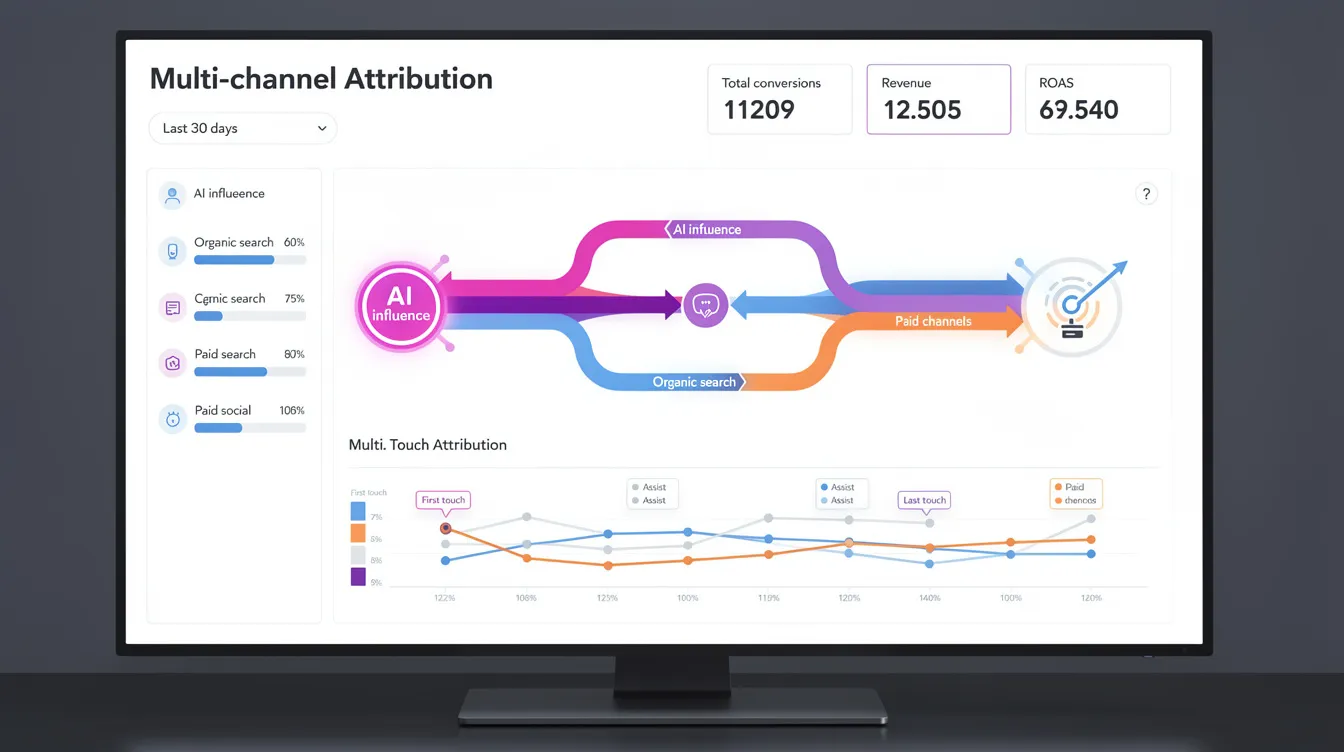
AI SEO ROI measurement requires shifting focus from traditional traffic metrics to citations, brand mentions, and AI visibility scores. The businesses achieving strong seo roi from AI search investment track share of voice across AI platforms, monitor citation frequency and quality, and correlate AI visibility with branded search growth and conversion outcomes.
Immediate actionable steps:
The ROI formula remains straightforward: (AI-attributed revenue − AI SEO costs) ÷ AI SEO costs × 100. The measurement challenge lies in accurately attributing revenue, which these systems address.
Related topics worth exploring include connecting AI search optimisation with local SEO for UK businesses, integrating AI visibility strategies with paid campaigns, and developing content strategy specifically designed for large language models and ai agents.
AI visibility audit checklist for UK small businesses:
ROI calculation template:
Recommended tools by business size:
Monthly AI SEO reporting elements: