AI SEO ROI measures the financial returns from optimising content for AI search platforms including ChatGPT, Google AI Overviews, Perplexity, and Claude. Unlike traditional SEO where success means ranking on page one, AI search optimisation success means your brand gets cited when large language models generate answers to user queries.
This guide covers measurement frameworks specifically designed for small-to-medium UK businesses investing in generative engine optimization. We focus on practical, implementable tracking systems rather than enterprise-level attribution models requiring dedicated data science teams.
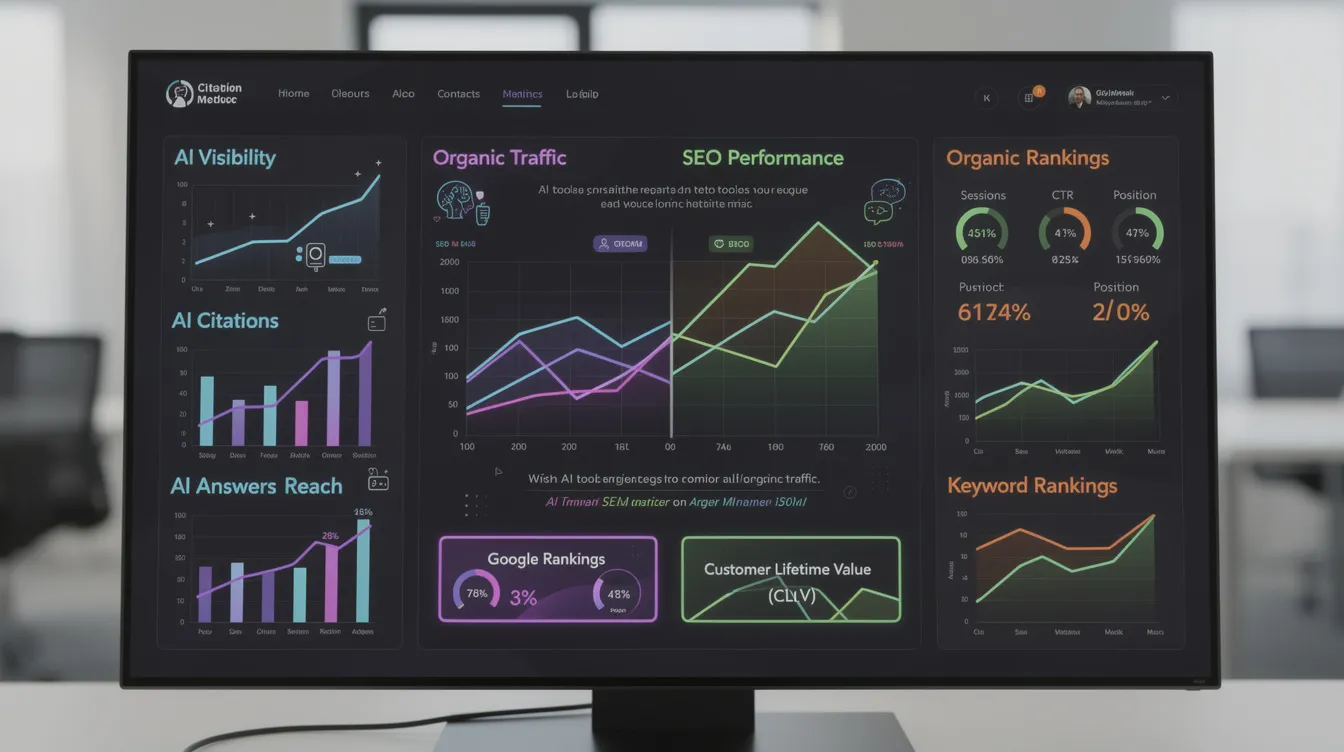
AI search optimisation requires fundamentally different measurement approaches than traditional search engine optimization. The business impact stems from brand visibility within AI answers rather than website traffic volume, which changes everything about how you prove value.
Traditional SEO drives clicks to your website where you control the conversion journey. AI search engines deliver complete answers within the platform itself, meaning users often get what they need without ever visiting external websites.
This zero-click phenomenon dominates AI search behaviour. When someone asks ChatGPT “best accounting software for UK small businesses,” they receive a comprehensive answer incorporating multiple sources. Your value comes from being cited as an authoritative source within that AI response, not from receiving a click.
Brand authority and citations create the competitive advantage in AI search. Users treat AI answers as trust signals, and being mentioned alongside industry leaders positions your brand for future consideration even without immediate traffic.
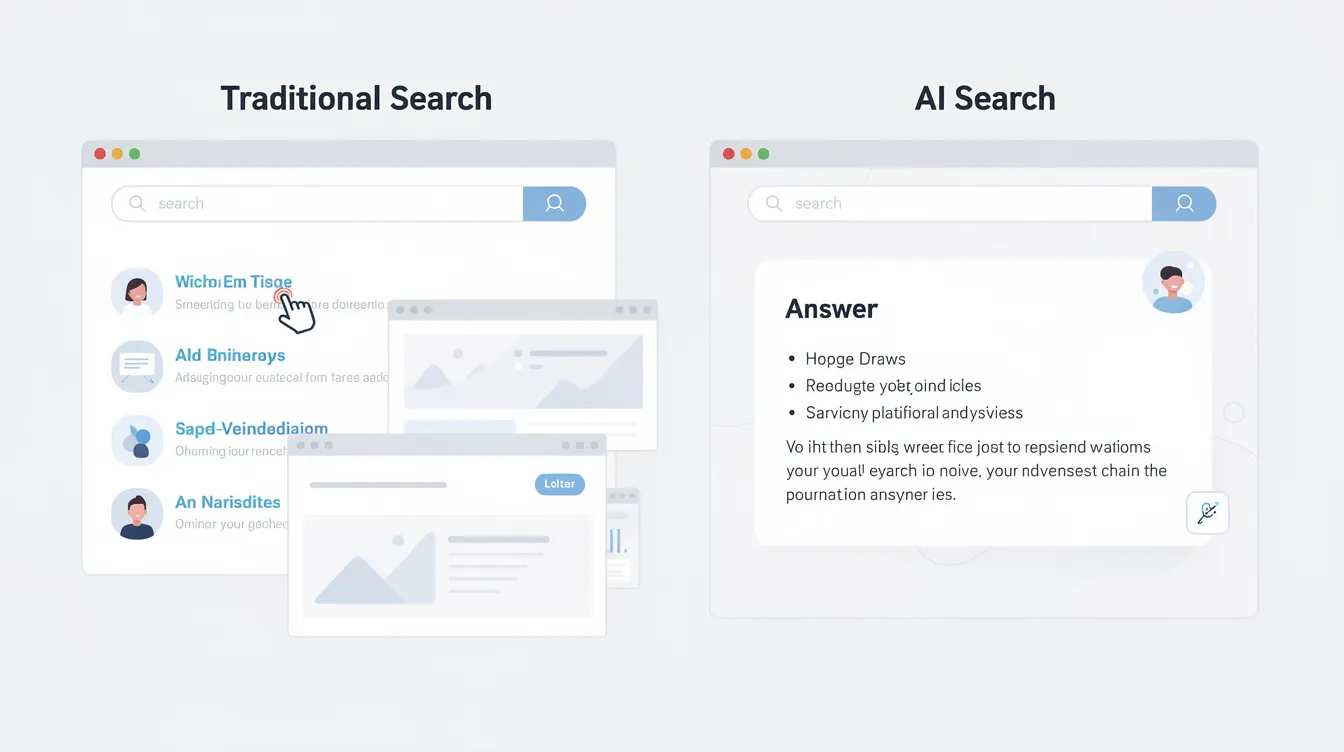
Click-through rates become meaningless when most AI answers don’t generate clicks. Bounce rates and session duration measure website engagement, but if users never reach your website, these metrics show nothing about your AI visibility performance.
Revenue attribution grows complex because AI systems blend multiple sources into single responses. Unlike Google rankings where position correlates with traffic, AI platforms may cite your content prominently while delivering zero referral traffic.
Traditional SEO ROI calculations assume direct paths from keyword rankings to conversions. AI search breaks this assumption because someone may discover your brand through ChatGPT, later search your brand name on Google, then convert through another channel.
Measuring AI SEO success requires tracking metrics that traditional SEO ROI frameworks don’t capture. These KPIs connect directly to revenue impact and sustainable growth in AI visibility.
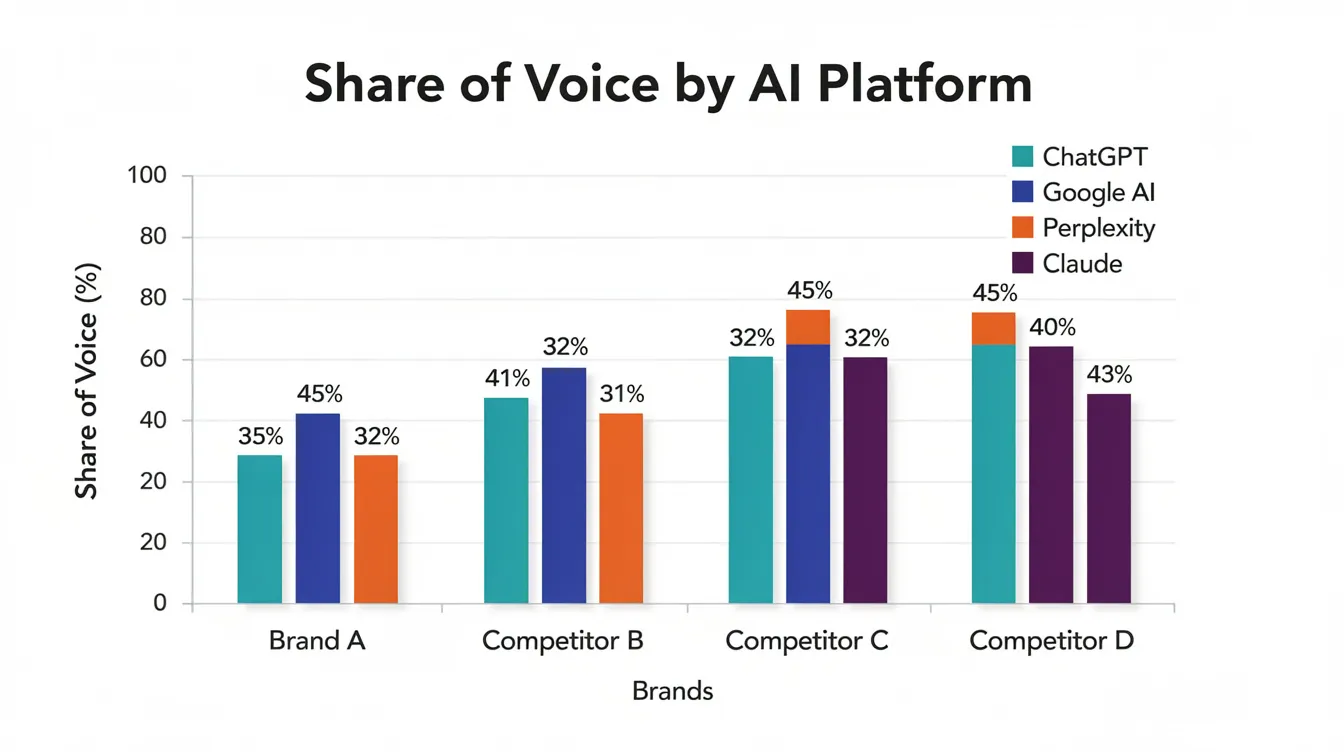
Share of voice measures what percentage of AI answers mention your brand versus competitors across relevant queries. This metric serves as your primary benchmark for AI visibility and market positioning within generative engine optimization.
Calculate share of voice by running a defined set of prompts across ChatGPT, Google AI, Perplexity, and Claude. Track how often your brand appears compared to competitors.
Citation frequency tracks how often AI models reference your content as a source. Monthly citation volume across AI platforms reveals whether your generative engine optimization efforts are gaining traction.
Not all citations carry equal weight. Analyse citation context to distinguish between basic mentions and high-value topic authority positions.
Response ranking position within AI answers also matters. Citations appearing in the first paragraph of an AI response receive more user attention than sources listed at the bottom.
Branded search volume increases following AI citations indicate AI-influenced brand awareness. Monitor your Google Search Console data for branded keyword growth that correlates with periods of high AI visibility.
Direct traffic growth from users typing your domain also signals AI search impact. Someone who encounters your brand in a ChatGPT response may later navigate directly to your website without any trackable referral source.
Converting AI visibility metrics into ROI calculations requires specific tracking infrastructure. This framework provides actionable steps for UK small-medium businesses to measure and prove AI search investment returns.

Different business contexts require different measurement approaches. Select your attribution model based on available resources and sales cycle complexity.
| Attribution Method | Best For | Accuracy Level | Complexity |
|---|---|---|---|
| Direct AI Referral | Immediate conversions, e-commerce | High | Low |
| Multi-touch Attribution | Full customer journey, B2B sales | Very High | High |
| Brand Lift Analysis | Awareness impact, long sales cycles | Medium | Medium |
| Branded Search Correlation | SMBs with limited tracking resources | Medium | Low |
Direct AI referral works when AI platforms provide clickable sources.
Multi-touch attribution assigns partial credit to AI mentions within longer customer journeys.
Brand lift analysis uses surveys asking “Where did you first hear about us?” with AI platform options.
Branded search correlation monitors whether branded search volume increases follow periods of higher AI visibility.
Challenge: AI generated answers satisfy user queries without generating website traffic, making traditional analytics appear to show zero impact.
Solution: Focus on brand lift metrics rather than direct traffic measurement. Track branded search volume increases through Google Search Console and use multi-touch attribution where possible.
Challenge: AI systems pull from multiple sources, making it difficult to attribute conversions to specific AI SEO investments.
Solution: Use CRM integration, customer journey mapping, and post-purchase surveys to capture customer-reported discovery paths.
Challenge: ChatGPT, Claude, and other AI platforms often don’t provide referral metadata.
Solution: Combine branded search monitoring, direct traffic analysis, AI citation tracking, and structured data improvements.
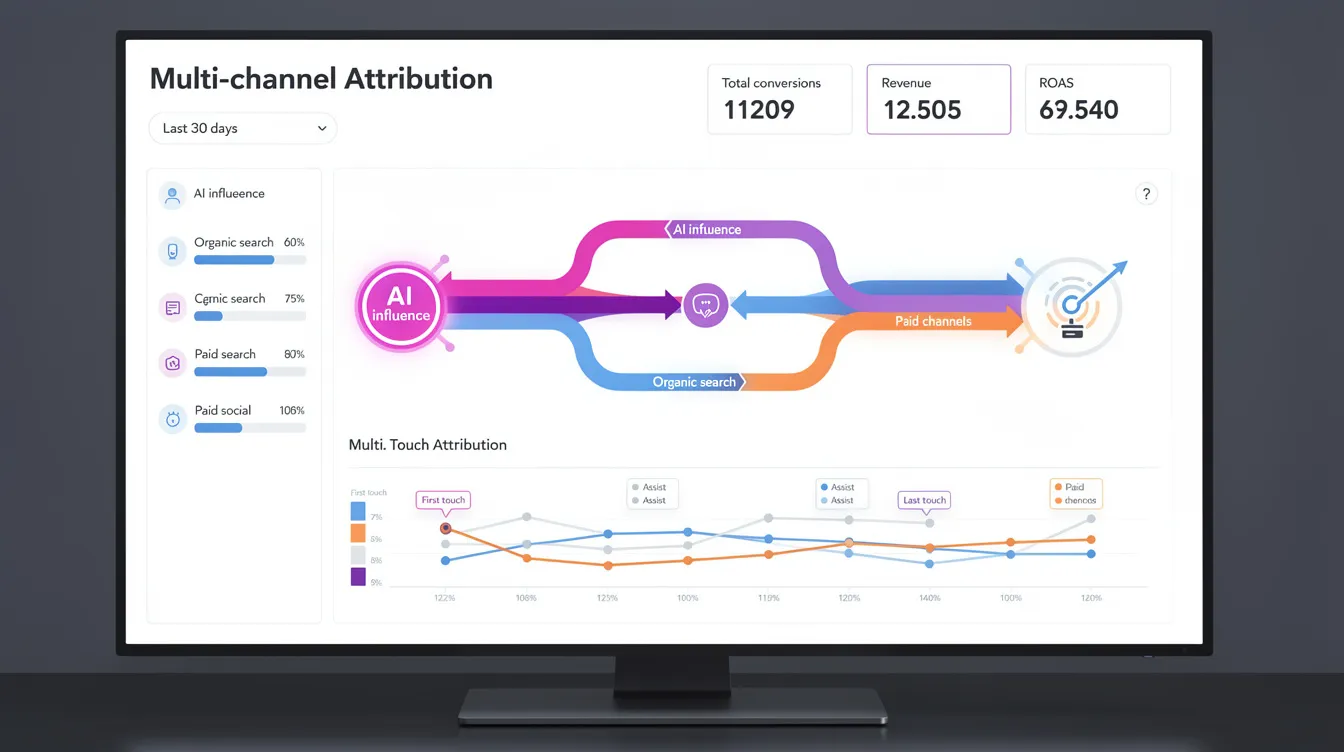
AI SEO ROI measurement requires shifting focus from traditional traffic metrics to citations, brand mentions, and AI visibility scores. The businesses achieving strong SEO ROI from AI search investment track share of voice across AI platforms, monitor citation frequency and quality, and correlate AI visibility with branded search growth and conversion outcomes.
The ROI formula remains straightforward: (AI-attributed revenue − AI SEO costs) ÷ AI SEO costs × 100. The measurement challenge lies in accurately attributing revenue, which these systems address.